 Alicante Plaza BeachApartment · Alicante City Centre
Book our apartment
Alicante Plaza BeachApartment · Alicante City Centre
Book our apartment
Alicante Plaza BeachApartment · Alicante City Centre
Book our apartment
Alicante Plaza BeachApartment · Alicante City Centre
Book our apartment
Alicante is one of the best-positioned cities in Spain for day trips. Within an hour's drive you have the most dramatic limestone rock on the Costa Blanca, a turquoise-watered medieval village perched on a cliff, Spain's only inhabited Mediterranean island, wild sand dunes with the clearest water on the coast, and some of the most beautiful whitewashed villages in the country. Here is exactly where to go, how to get there and what to expect.
Tabarca is the undisputed highlight of any stay in Alicante. A tiny island just 12 nautical miles offshore — 1,800 metres long and 400 metres wide — it is a protected marine reserve with some of the clearest water on the entire Spanish Mediterranean coast. The combination of a walled 18th-century village, exceptional snorkelling, fresh fish restaurants and a boat journey makes it the day trip that guests remember most.
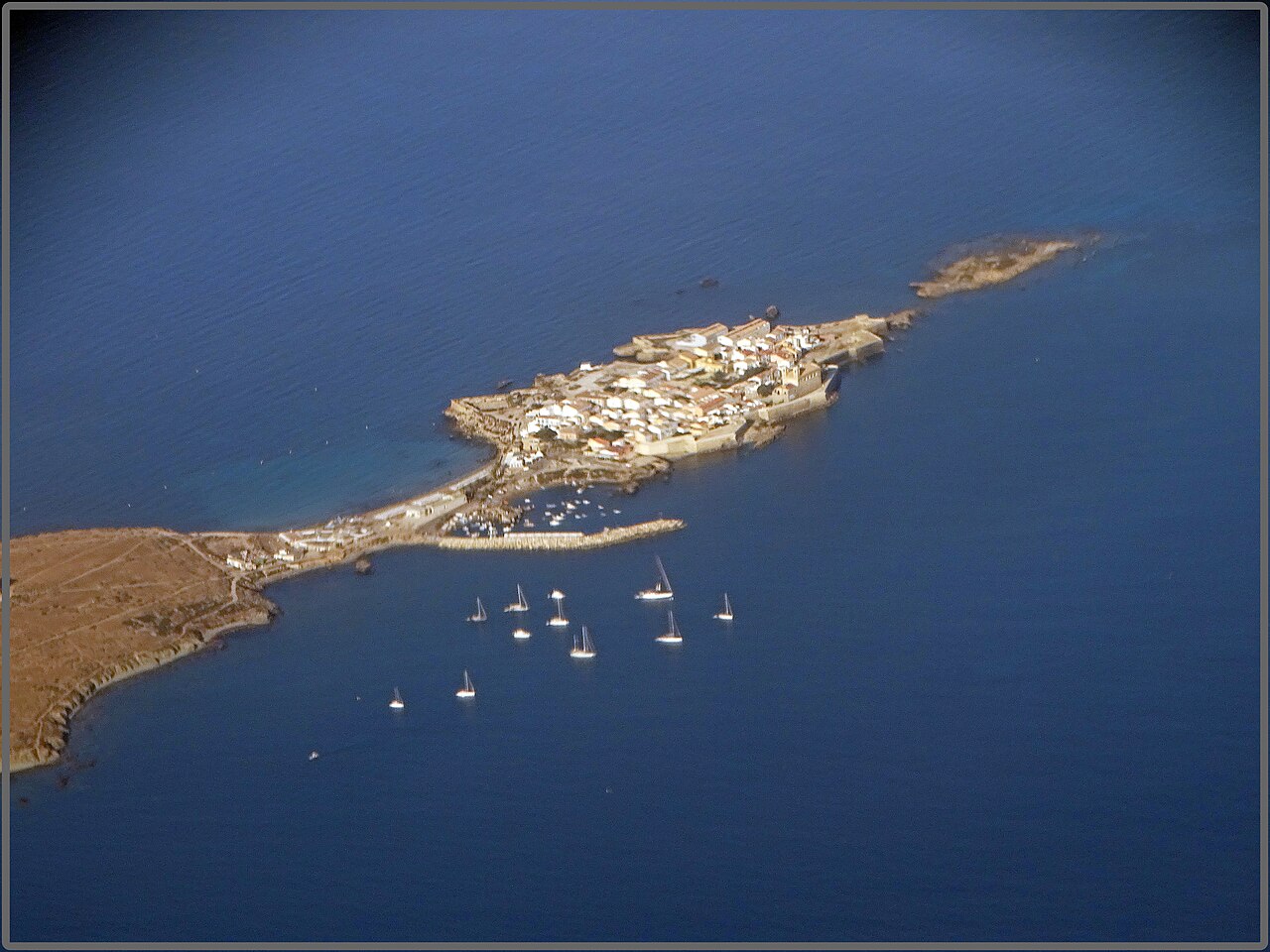
Tabarca Island from above — the turquoise water of the marine reserve is exactly what it looks like in real life.
The waters around Tabarca were declared Spain's first marine reserve in 1986. The result is an underwater world that is genuinely spectacular even for casual snorkellers: visibility of 10 metres or more, sea grass meadows, sea bream, sea bass, octopus and starfish just below the surface. Children from age 5 can snorkel here without any experience — the water is calm, shallow in places and crystal clear. In October, the visibility reaches its annual peak as the summer boat traffic has subsided.
El Castell de Guadalest is the most visited inland village in Alicante province — and one look explains why. It sits at 595 metres on a rocky outcrop above a valley, accessible only through a tunnel cut into the mountain. Below the village, a reservoir of extraordinary turquoise-blue water glitters between forested mountains. It is one of those views that genuinely surprises people who were not expecting it.
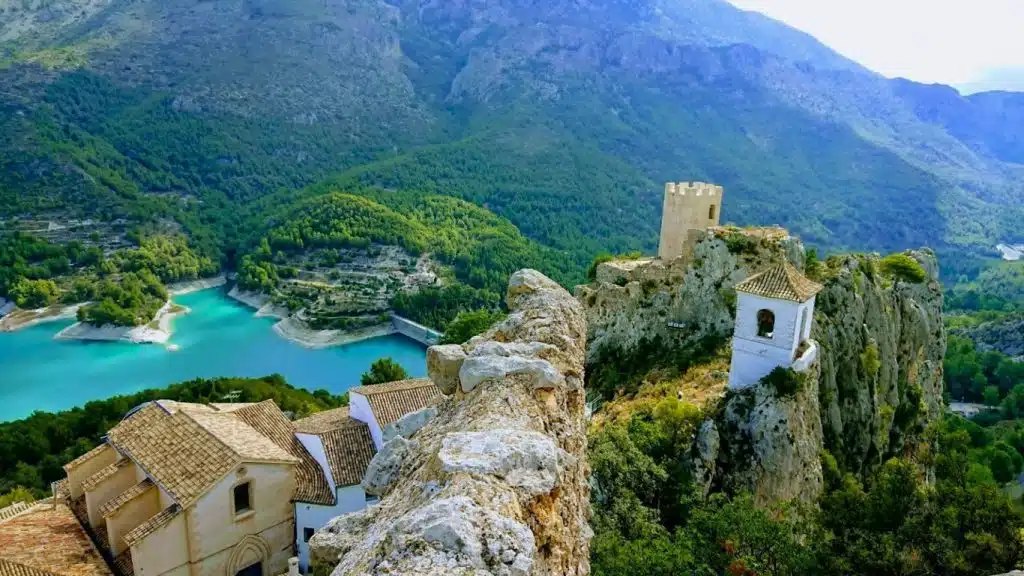
Guadalest — the castle perched on its rock above the turquoise reservoir. One of the most photographed views in the province of Alicante.
The village is small but extraordinarily dense with things to do. Enter through the rock tunnel and climb to the Castillo de San José via the Casa Orduña (€4 adults, €2 children under 6) — a noble house from the 18th century that gives access to the castle and spectacular panoramic views over the reservoir. Allow 1.5 hours for the castle and Casa Orduña alone.
Guadalest also has 9 museums, which sounds like too many but several are genuinely worth it:
Each museum costs €3–5 per adult. The official Guadalest website has current opening hours and prices.
Below the village, a circular walking route of 13 km skirts the full perimeter of the reservoir — through pine forest, olive and almond groves, with constant views of the turquoise water below. It takes 3–4 hours at a relaxed pace and is suitable for families with older children (8+). Start from the Beniardà end for the best views on the approach. You can also simply descend from the village to the reservoir edge on a shorter path (2 km return) for the photos without doing the full circuit.
Altea is consistently voted one of the most beautiful villages in Spain — and it earns the title. The whitewashed old town climbs a hillside above a turquoise bay, crowned by the distinctive blue dome of the Church of Our Lady of Consolation. The narrow cobbled streets are lined with art galleries, craft shops, flower pots and terraces with views over the Mediterranean. It is genuinely stunning, especially in the morning light or late afternoon when the stone walls glow orange.
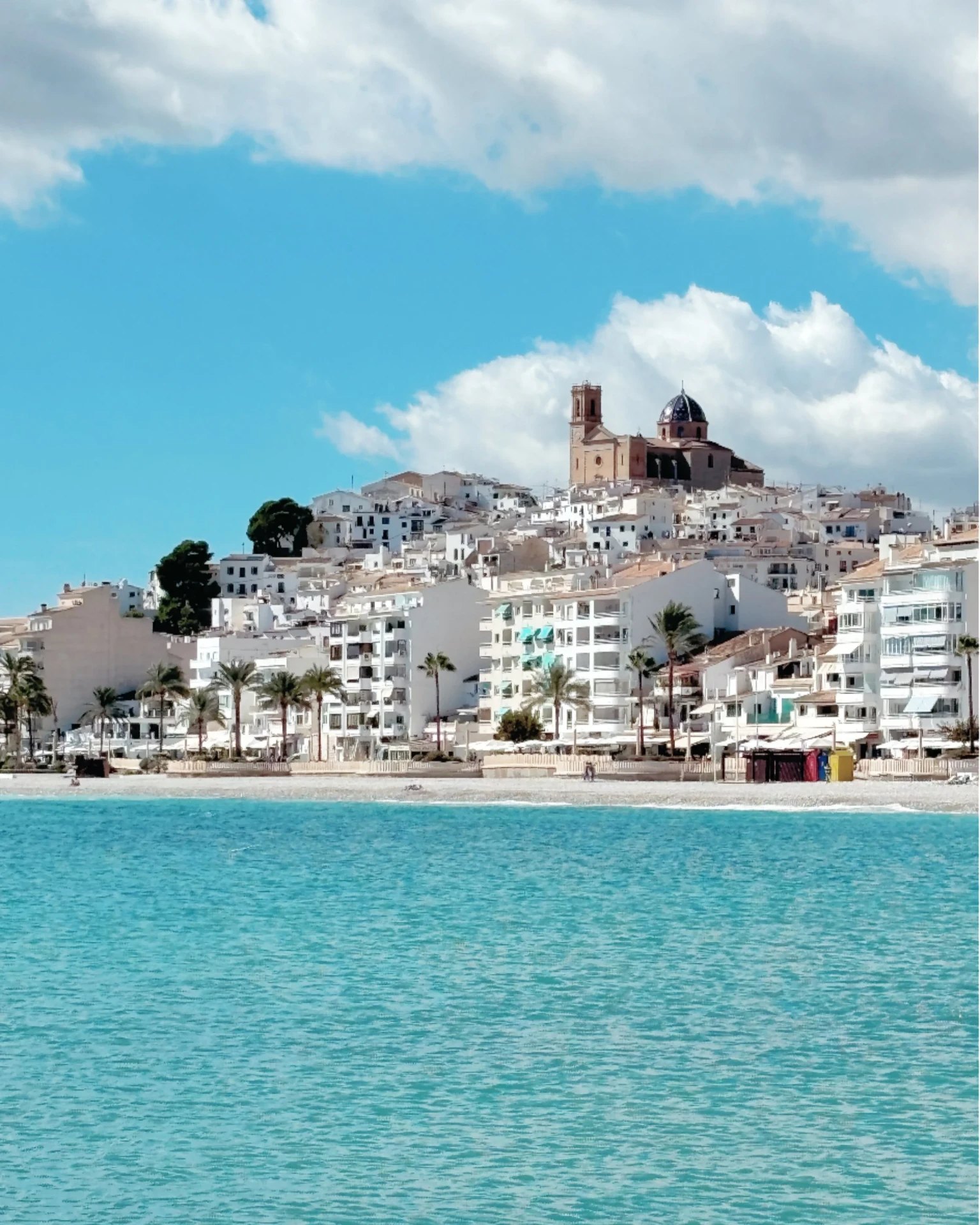
Altea from the sea — the blue dome of the church above the whitewashed old town and crystal-clear bay below.
The old town is best explored on foot without a plan — simply wander uphill from the main square (Plaza de la Iglesia) and let the streets take you. The church itself is open to visitors and the views from the terrace in front of it are among the best on the Costa Blanca. Below the old town, the pebble beach and port area have excellent fish restaurants for lunch. The Saturday market on the promenade brings local producers and crafts and is worth timing a visit around.
The Peñón de Ifach is one of the most recognisable natural landmarks in Spain — a 332-metre limestone monolith rising dramatically from the sea at Calpe, connected to the mainland by a narrow strip of sand. It is a Natural Park and one of the most visited natural sites on the Costa Blanca. From its summit, on clear days, you can see all the way to Ibiza.
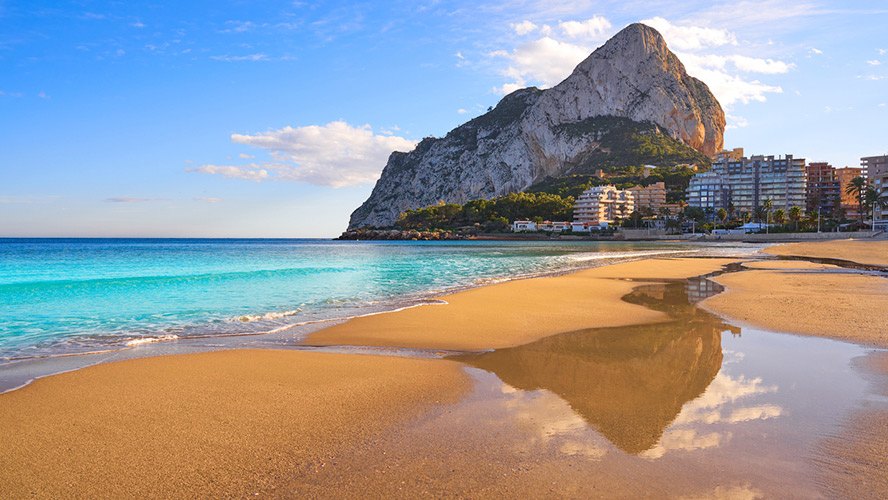
The Peñón de Ifach at Calpe — one of the most dramatic natural landmarks in Spain, rising 332 metres directly from the sea.
The route to the top passes through a tunnel in the rock before emerging onto the upper face for the final climb. The hike is rated moderate — it takes 1.5–2 hours return and requires some scrambling on the upper section. Good footwear is essential. From the top, the views are extraordinary in every direction: Calpe's beaches and salt lakes below, the Costa Blanca stretching south toward Benidorm and north toward Dénia, and the open Mediterranean beyond.
Calpe itself has two excellent beaches flanking the Peñón — Playa de la Fossa and Playa Arenal-Bol — with turquoise water, good facilities and the dramatic backdrop of the rock. The port area has excellent seafood restaurants, particularly known for fresh prawns (gambas de Calpe). A half-day hike combined with lunch at the port and a swim is one of the best days possible on the Costa Blanca.
While Postiguet and San Juan are excellent city beaches, Carabassi is something different entirely. Located 20 minutes south of Alicante near Elche, it is a protected natural beach of 3.5 km backed by sand dunes, pine trees and Mediterranean scrub — no buildings, no sunbed rentals, no beach bars. The water here is exceptional: shallow, calm and a shade of turquoise that looks more Caribbean than Costa Blanca. It consistently ranks among the cleanest beaches in the Valencian Community.
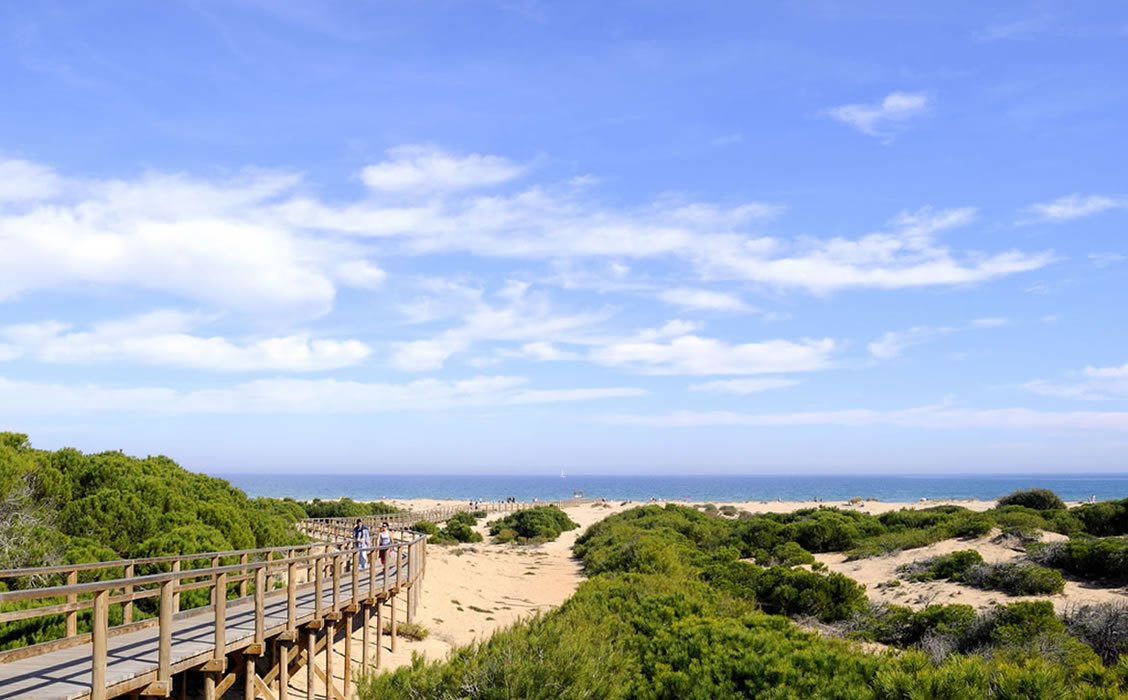
Playa del Carabassi — wild dunes, crystal-clear water and almost no crowds. One of the best natural beaches near Alicante.
The beach is part of a protected natural area — which means no development and no noise. Access is via a wooden boardwalk through the dunes that is itself worth the trip. The water is shallow for a long stretch from the shore, making it ideal for families with young children. Because it is less known than the city beaches, even in July and August you can find space. Bring everything you need — food, water, sun protection — as there are no permanent facilities.
Benidorm needs no introduction — the skyline of 30-storey towers above two of the best beaches on the Costa Blanca is one of the most recognised images in Spain. But combining a morning on Levante or Poniente beach with an afternoon walk to the Faro del Albir gives the day a dimension that pure resort tourism does not.
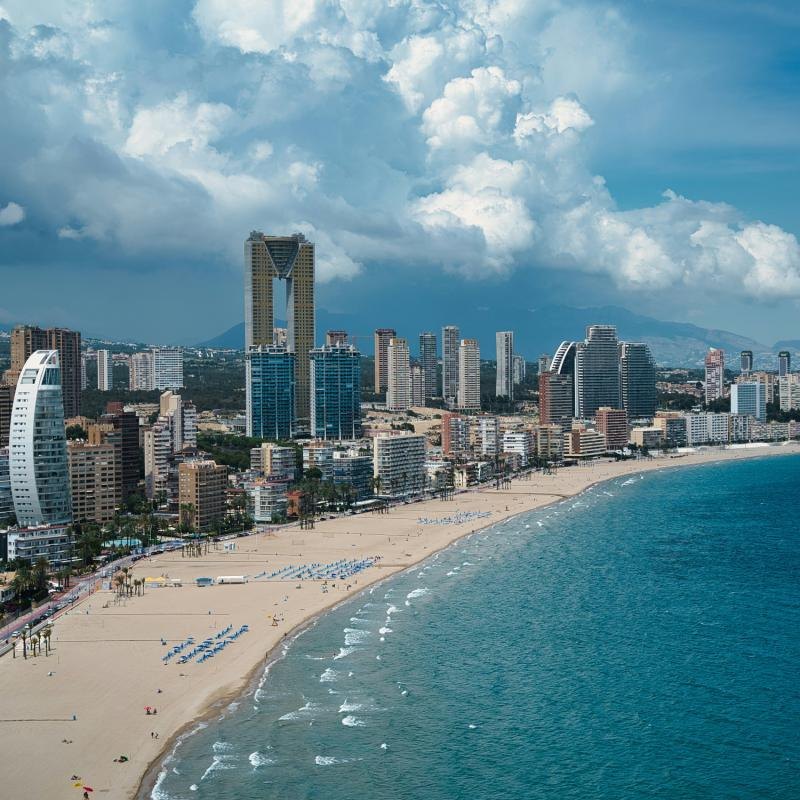
Benidorm's Playa de Levante — one of the best urban beaches in Spain, wide, clean and backed by the famous skyline.
Levante beach (eastern side) and Poniente beach (western side) are both exceptional — wide, clean, with fine golden sand and clear blue water. Levante tends to be livelier and more international; Poniente is slightly quieter and preferred by families. Both have full facilities. The water is genuinely beautiful — blue, calm in normal weather and well maintained. Spend the morning swimming and exploring the old town on the hill between the two beaches.
From Benidorm, it is 7 km to the village of El Albir (taxi or bus). From there, the Faro del Albir route begins — a 5 km round trip on a fully paved path (accessible for pushchairs and wheelchairs) through the Sierra Gelada Natural Park to a lighthouse perched 112 metres above the sea. The views from the lighthouse are extraordinary: the full sweep of the Bay of Altea, the rock of Peñón de Ifach in the distance, and the Mediterranean stretching south toward Alicante.
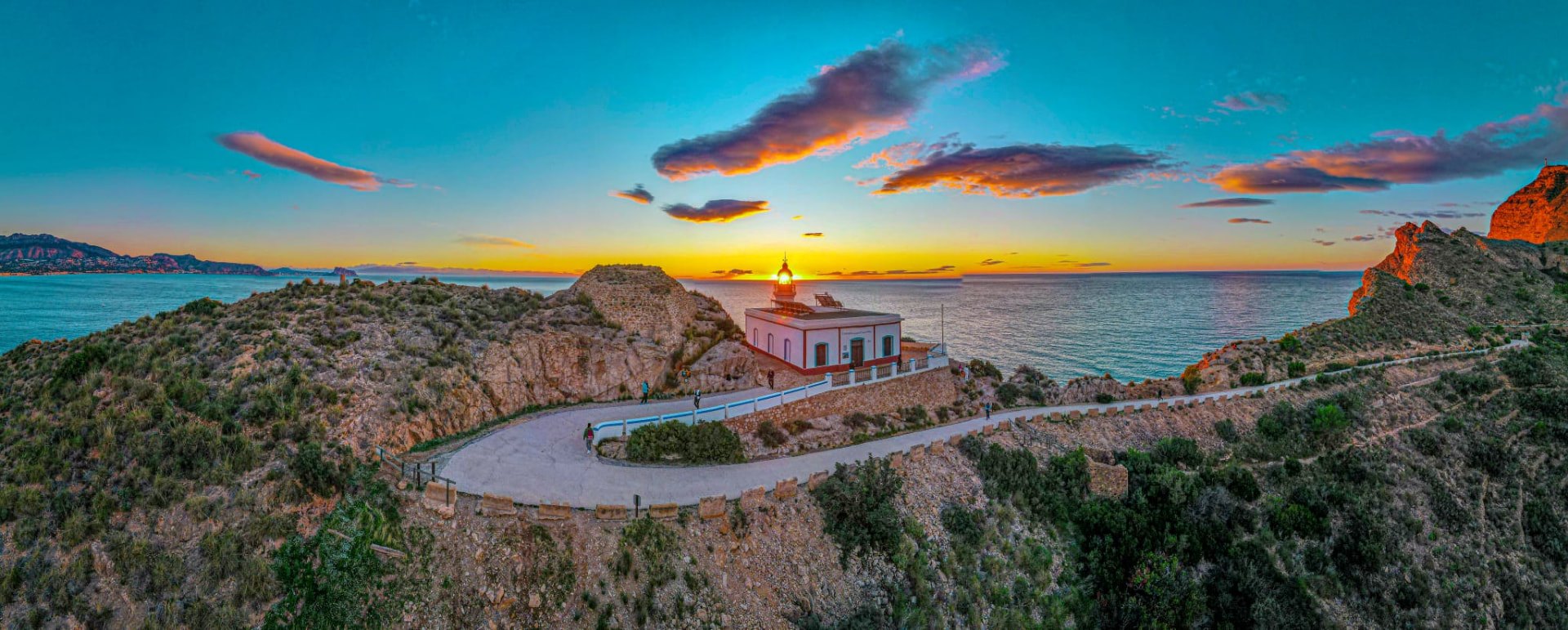
The Faro del Albir at sunset — the views from the lighthouse over the Bay of Altea are among the best on the Costa Blanca.
The Fuentes del Algar — Springs of the Algar — are a series of natural waterfalls and turquoise pools in a gorge near Callosa d'en Sarrià, about 65 km north of Alicante. Fed by a spring that maintains a constant temperature year-round, the water is cold and clear, cascading over limestone rocks into natural swimming pools. It is one of the most visited natural sites in the province, and one of the most visually striking.
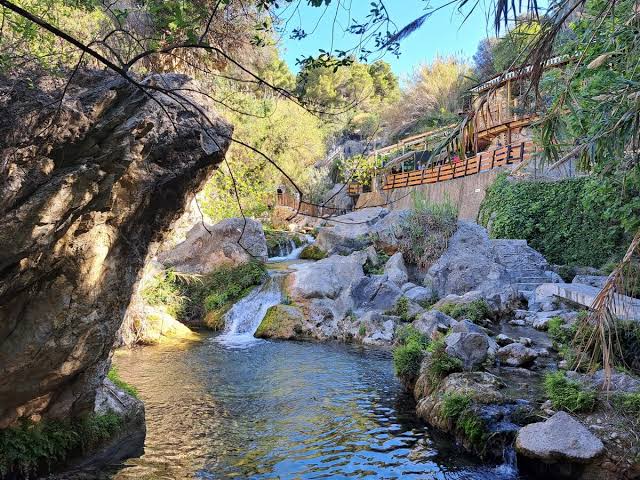
Fuentes del Algar — wooden walkways, waterfalls and crystal-clear pools in a protected gorge inland from Alicante.
The site is accessed via a walkway with wooden bridges and steps alongside the cascade — a genuinely beautiful walk even if you do not swim. The main waterfall is the most dramatic, dropping several metres into a clear pool. Swimming is allowed in the designated areas. In summer the site gets busy — arrive early or visit in September-October for a much more relaxed experience. There is a small entrance fee and a café at the entrance.
Elche is 25 minutes from Alicante by train and home to the largest palm grove in Europe — 200,000 date palms declared a UNESCO World Heritage Site in 2000. Walking through the Palmeral of Elche is a completely different landscape from anything else on the Costa Blanca: shaded paths under towering palms, the sound of irrigation channels, and the extraordinary Huerto del Cura garden at its heart.
Alicante Plaza Beach is 145 m² in the city centre — 15 minutes walk from the ferry to Tabarca, 8 minutes from the TRAM to Elche and San Juan beach, 15 minutes from the bus station for Benidorm and Altea. Three double bedrooms, sleeps up to 8. Minimum stay 4 nights. Book direct for the best price.
Check availability & book direct →